20 AI Tools From One Curator: A Practitioner's Review of the Applied AI List
This is an adapted English version. Original (Russian): automata.sale/blog/ai-automation/obzor-20-ai-instrumentov-applied-ai/

Curated AI tool lists are everywhere, and most of them read like warehouse catalogs: fifty logos, zero opinions. The Applied AI list by Matt Penny is the opposite kind: twenty tools, short honest descriptions, no ratings theater. That brevity is exactly why it is worth a practitioner’s review, because with a list this tight every slot was chosen.
We run an automation studio, so our test for any tool is simple: does it already do billable work, or is it a demo? Here is the Applied AI list against that standard.
Four that already run our production
Remotion. An open-source React framework that renders videos from code. This is not a “someday” tool for us: our article-to-video pipeline renders 30-second vertical reels from article data, with the palette, fonts and timing living in components. When the brand changed, the fix was a token edit and a re-render, not a timeline re-edit. If you write React and need recurring video, nothing else on this list comes close.
Nano Banana 2. Google’s fast image model, and the engine behind our blog cover production: sixteen-plus covers generated through a wrapper service, each checked and cropped to a strict 1200x630 frame. It is fast enough that cover generation stopped being a milestone and became a step. The honest caveat: text rendering in images is still its weak spot, so we keep lettering out of prompts.
Hyperframes. The other “video as code” framework on the list, HTML/CSS/GSAP based instead of React, open source under Apache-2.0 with local rendering. We ran it for a promo clip, and it is a serious option when your team’s native tongue is the web stack rather than React. Two video-as-code tools on one curated list tells you where the curator thinks media production is going: deterministic, scripted, reviewable.
Terminal coding agents (the Claude Code class). Our studio literally runs on one: this article, the deployment pipeline, the social publishing stack, all written, reviewed and shipped by an agent in the terminal with a human approving the deltas. Claude Code is the best-known name of the class; OpenCode and Roo Code are the open-source flavors, and the differences today matter less than the workflow shift: agents write, humans decide.
On our bench, seriously evaluated
n8n. Workflow automation with 500+ integrations and a visual editor. Solid for teams whose automation owners are not developers. Our conveyor is code-first and event-driven, so n8n is the alternative we recommend to clients, not the one we run. Both are legitimate answers; know which kind of team you are.
OpenRouter. One API, 400+ models. Attractive as a hedge and for sampling new models. We stay on direct provider APIs for production because billing, rate limits and data paths stay explicit. For experiments and benchmarks, a router is hard to beat.
Jina.ai and Tavily. Search infrastructure for RAG and agents: embeddings, rerankers, readers, agent-oriented search APIs. If your AI plans include “chat with our documents”, these two names belong on your shortlist before any chatbot vendor.
Antigravity, Lindy, Airtop. The agent-platform wave: an agent-first IDE from Google, no-code AI employees, no-code web agents. We watch this space with engineer’s skepticism: the moment an “employee” touches real systems, auditability beats demo polish, and code-first agents currently win on that axis. But the direction is right, and for teams without engineers these are the most accessible doors.
The rest, at a glance
GenAI Pro bundles text, image and voice under one subscription as an alternative to several premium plans. Higgsfield and Google Flow cover AI video, the former with realistic human characters, the latter pairing Nano Banana 2 images with Veo 3 editing. Wispr Flow speeds up writing by voice. CapCut is the free short-form video editor everyone already knows. OpenArt is a friendly image-generation front end (its link on the list carries affiliate parameters, worth knowing). OpenClaw runs an autonomous agent locally, wired into messaging.
None of these are bad tools. They simply are not our bottlenecks, and that is the whole point of the review method.
The verdict
The Applied AI list earns its keep: short, current, and unsurprisingly heavy on agent tooling and video-as-code, which matches where production work is actually moving. Our four-in-production score is unusually high for a curated list, which says the curation is grounded in real use, not press releases.
The method matters more than the list. Filter by bottleneck, prefer tools that compound (code, templates, pipelines you keep), and run a two-week pilot on a real task before giving anything a permanent seat. A tool list is a menu. Your production stack is a diet, and diets are personal.
Original list: its-applied-ai.com/tools. We build the kind of pipelines these tools plug into, agents, media and integrations first: automata.sale.
Phone: +7 (906) 311-77-69, email: hello@automata.sale, Telegram: @automatasale, site: automata.sale
Evgeny Uryadov, sole proprietor (INN 645112058391, OGRNIP 312645301900058). Working across Russia, Belarus and Kazakhstan.
Frequently asked questions
Did you test all 20 tools?
No, and we say so openly. Four run in our daily production (Remotion, Nano Banana 2, Hyperframes and our terminal coding agent), several more are on the evaluation bench. For the rest we assessed positioning and fit, not hands-on months.
Is the original list independent?
Mostly curation, but not entirely: at least one link (OpenArt) carries affiliate parameters. That does not invalidate the list, yet it is a reminder to weigh any curated shelf with your own bottleneck in mind.
If I pick just one tool, which one?
Follow your bottleneck, not the list order. Writing-heavy work: a terminal agent. Video: Remotion if you code, CapCut if you do not. Search over your own docs: Jina or Tavily before any shiny studio.
Why prefer open-source options like Remotion and Hyperframes?
Determinism and ownership. When video renders from code, a rebrand is a variable change and an audit is a diff, not a timeline re-edit. Both are free to run locally, which matters when volume grows.
Read next

AI Chatbot for Your Website: a Consultant That Knows Your Catalog and Never Makes Things Up
We build AI chatbots for websites: an LLM wired to your knowledge base, answers without hallucinations, leads routed to your CRM or messenger. Setup from ₽30,000.

Obsidian Second Brain: a Vault That Becomes the Memory of Your AI Agents
A review of obsidian-second-brain (4.7k stars), an evolution of Karpathy's LLM Wiki pattern: a vault that rewrites itself. And why our Automata CRM runs on the same idea.
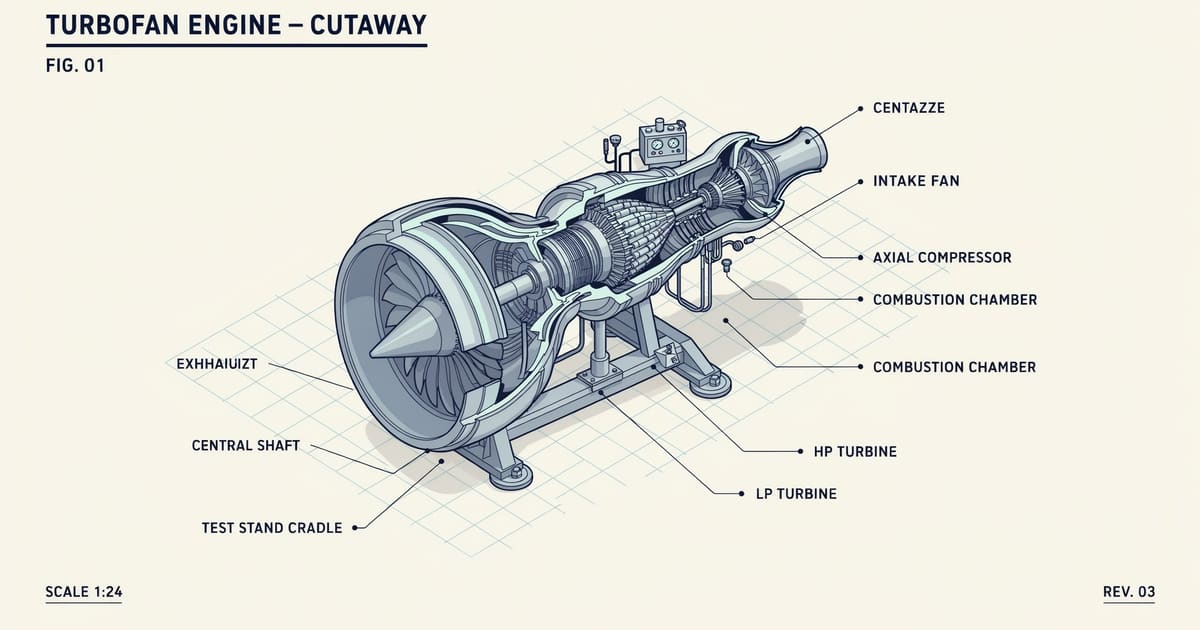
Anatomy: the open-source skill that teaches AI agents to draw machines
The anatomy skill (12.4k stars) turns AI agents into technical illustrators: isometric SVG machines with live physics. Our turbofan test case runs inside this post.